
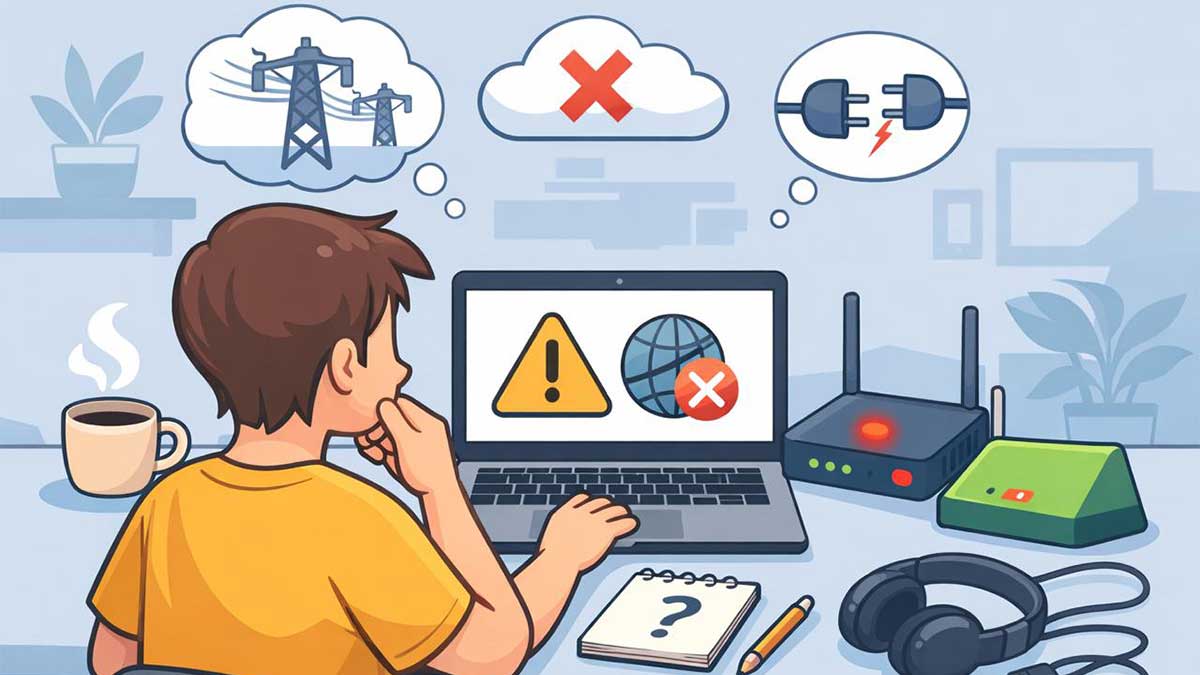
Seeing a Wi-Fi connection but having no internet access is one of the most confusing tech problems for beginners. Your device says it’s connected, yet websites won’t load and apps don’t work.
The good news is that this issue is usually caused by simple connection or network problems, not serious damage. This guide walks you through safe, step-by-step checks you can try at home. Many of these issues are also explained in our guide on common tech problems and how to fix them.
What “Wi-Fi Connected but No Internet” Really Means
When this happens, it means:
So the problem is often between the router and the internet service, not your device itself.
Step 1: Check If the Internet Is Down
Before changing any settings, confirm whether the internet service is working.
What to do:
If no one has internet, the issue is likely with the service provider and may resolve on its own.
Step 2: Restart the Modem and Router (Most Important Step)
This fixes many internet problems.
How to restart correctly:
Restarting clears temporary network errors and refreshes the connection.
Step 3: Forget and Reconnect to the Wi-Fi Network
Sometimes your device saves a faulty connection.
What to do:
This often fixes authentication and connection issues.
Step 4: Check Date, Time, and Airplane Mode
Incorrect settings can block internet access.
Check that:
These small settings can cause internet access to fail even when Wi-Fi is connected.
Step 5: Test With a Different Device
If one device has no internet but others work:
For general device issues, our basic computer troubleshooting guide explains safe steps beginners can follow.
Step 6: Check Router Lights and Cables
Look at your router and modem lights:
Make sure all cables are firmly connected and undamaged.
Step 7: Reset Network Settings (Optional)
If the problem continues, resetting network settings may help.
This will:
⚠️ Only do this if basic steps don’t work, as you’ll need to reconnect networks afterward.
Step 8: When to Contact Your Internet Provider
Contact support if:
This will:
This helps resolve the problem faster.
Final Thoughts
Seeing Wi-Fi connected but no internet access is frustrating, but most cases are easy to fix with simple checks. Restarting equipment and reconnecting to the network solves many issues without technical knowledge.
If you’re experiencing other device or software problems, our guide on why your device may not be working walks you through beginner-friendly troubleshooting steps.
For a complete overview of everyday technology issues, visit our main guide on common tech problems and how to fix them.